Dorit Ron
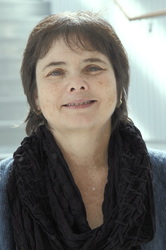
Professor of Neurology and Endowed Chair in Cell Biology of Addiction in Neurology
Scientific Director, Alcohol Center for Translational Genetics
Member, Neuroscience Graduate Program
Member, Biomedical Sciences Graduate Program
Member, Pharmaceutical Sciences and Pharmacogenomics Graduate Program
Scientific Director, Alcohol Center for Translational Genetics
Member, Neuroscience Graduate Program
Member, Biomedical Sciences Graduate Program
Member, Pharmaceutical Sciences and Pharmacogenomics Graduate Program
Dr. Ron is a Professor in the Department of Neurology at UCSF, is a Gallo Center investigator and is a member of the Neuroscience Graduate Program. She is also the Endowed Chair in Cell Biology of Addiction in Neurology at UCSF, the Scientific Director for a P50 NIH-NIAAA Center Grant. She is a recipient of several NIH RO1 and DOD grant awards. In 2013, Dr. Ron received and NIH MERIT and is an Associate Editor for the Journal of Neuroscience, Addiction Biology, the Alcohol Journal, as well as a field editor for Alcoholism: Clinical and Experimental Research. Dr. Ron’s research focuses on the molecular neurobiology of alcohol use disorders for which her laboratory uses molecular, electrophysiological and rodent behavior approaches. Dr. Ron’s areas of expertise are: molecular neuroscience, signal transduction, neurobiology of addiction and psychiatric disorders. Over the years the Ron lab has made numerous major contributions to the field of addiction and identified novel targets that could potentially be developed as therapeutics to treat alcohol addiction. Several of the studies resulted in UCSF press releases, which received the attention of both the scientific community and the general public.
In Dr. Ron's Lab, we use molecular biology, biochemistry, and electrophysiology, in parallel with behavioral models, to study how scaffolding proteins and kinases regulate neuronal function and gene expression. We also study how these normal processes are altered upon exposure to alcohol and drugs of abuse, and how these changes lead to the development or the prevention of addiction.
Current Lab Members

Nadege Morrisot
Postdoctoral Fellow
Lab Member Since: 2014
Research Interests: Signaling in dopaminergic pathways and addiction-like behaviors
Approach: Behavioral
Email: [email protected]
Nadege obtained her PhD at The University of Bordeaux (France) in 2013. She uses rodent behavioral models (voluntary intake of rewarding substances, operant-responding, conditioned place preference, elevated plus maze) and various tools (pharmacological, viral-mediated gene delivery, transgenic animals) to modulate signaling pathways activated by alcohol, particularly in the cortico-limbic-striatal circuitry, and determine their role in the development and maintenance of alcohol-related behaviors.
Postdoctoral Fellow
Lab Member Since: 2014
Research Interests: Signaling in dopaminergic pathways and addiction-like behaviors
Approach: Behavioral
Email: [email protected]
Nadege obtained her PhD at The University of Bordeaux (France) in 2013. She uses rodent behavioral models (voluntary intake of rewarding substances, operant-responding, conditioned place preference, elevated plus maze) and various tools (pharmacological, viral-mediated gene delivery, transgenic animals) to modulate signaling pathways activated by alcohol, particularly in the cortico-limbic-striatal circuitry, and determine their role in the development and maintenance of alcohol-related behaviors.

Sophie Laguesse
Postdoctoral Fellow
Member since 2014
Research interests: Protein translation, the mTOR pathway and alcohol addiction
Approaches: molecular biology, biochemistry
Email: [email protected]
Sophie received her PhD in Neurosciences at the University of Liege, Belgium. She focuses her interest on mTOR signaling pathway in alcohol addiction. She uses biochemical and molecular methods to identify the role of synaptic proteins whose translation is regulated by alcohol and study their function in the neuroadaptations underlying alcohol addiction. She also studies the contribution of downstream targets of the PI3K signaling in the neuroadaptations in the Nac induced by alcohol that lead to ethanol-drinking behavior in rodents.
Postdoctoral Fellow
Member since 2014
Research interests: Protein translation, the mTOR pathway and alcohol addiction
Approaches: molecular biology, biochemistry
Email: [email protected]
Sophie received her PhD in Neurosciences at the University of Liege, Belgium. She focuses her interest on mTOR signaling pathway in alcohol addiction. She uses biochemical and molecular methods to identify the role of synaptic proteins whose translation is regulated by alcohol and study their function in the neuroadaptations underlying alcohol addiction. She also studies the contribution of downstream targets of the PI3K signaling in the neuroadaptations in the Nac induced by alcohol that lead to ethanol-drinking behavior in rodents.
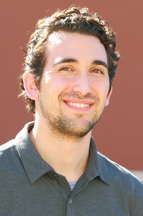
Samuel Sakhai
Postdoctoral Fellow
Member since 2015
Research interests: BDNF signaling in frontostriatal circuits and animal behavior
Approaches: Behavioral
Email: [email protected]
Samuel received his PhD in Behavioral Neuroscience from the Department of Psychology at the University of California, Berkeley in 2014. Currently, he is researching how alcohol, by altering signaling factors involved in neuroadaptations, is capable of underlying the transition from moderate to excessive drinking. To do this, he uses rodent behavioral assays (e.g. , operant responding, alcohol consummatory behaviors, goal directed vs. habitual behavoirs) and molecular tools (e.g., pharmacological, viral-mediated gene delivery, optogenetics) to investigate BDNF in frontostriatal circuits.
Postdoctoral Fellow
Member since 2015
Research interests: BDNF signaling in frontostriatal circuits and animal behavior
Approaches: Behavioral
Email: [email protected]
Samuel received his PhD in Behavioral Neuroscience from the Department of Psychology at the University of California, Berkeley in 2014. Currently, he is researching how alcohol, by altering signaling factors involved in neuroadaptations, is capable of underlying the transition from moderate to excessive drinking. To do this, he uses rodent behavioral assays (e.g. , operant responding, alcohol consummatory behaviors, goal directed vs. habitual behavoirs) and molecular tools (e.g., pharmacological, viral-mediated gene delivery, optogenetics) to investigate BDNF in frontostriatal circuits.

Anna Fiorenza
Postdoctoral Fellow
Lab Member Since: 2015
Email: [email protected]
Anna received her PhD in Neuroscience at the Universidad Miguel Hernandez (Alicante, Spain) in 2015. Her main aim is identifying microRNAs able to regulate BDNF expression and investigating their role in drinking behavior, both in moderate and excessive drinking. In addition, she’s also interested in identifying the role of BDNF in conferring predisposition to the development of excessive drinking. Her research strategy includes a variety of cellular and molecular tools, including viral-mediated gene delivery and the use of transgenic mouse lines.
Postdoctoral Fellow
Lab Member Since: 2015
Email: [email protected]
Anna received her PhD in Neuroscience at the Universidad Miguel Hernandez (Alicante, Spain) in 2015. Her main aim is identifying microRNAs able to regulate BDNF expression and investigating their role in drinking behavior, both in moderate and excessive drinking. In addition, she’s also interested in identifying the role of BDNF in conferring predisposition to the development of excessive drinking. Her research strategy includes a variety of cellular and molecular tools, including viral-mediated gene delivery and the use of transgenic mouse lines.

Benjamin Dorn
Graduate Student/PhD Candidate
Lab Member Since: 2015
Research Interests: Cortical GDNF pathways and alcohol addiction
Approaches: Behavioral, molecular
Email: [email protected]
Benjamin graduated from UC San Diego with a BS in Cognitive Science. His research focus is on finding molecular pathways in the brain that are protective against excessive alcohol consumption and relapse, and whose dis-regulation may play a role in alcohol addiction.
Graduate Student/PhD Candidate
Lab Member Since: 2015
Research Interests: Cortical GDNF pathways and alcohol addiction
Approaches: Behavioral, molecular
Email: [email protected]
Benjamin graduated from UC San Diego with a BS in Cognitive Science. His research focus is on finding molecular pathways in the brain that are protective against excessive alcohol consumption and relapse, and whose dis-regulation may play a role in alcohol addiction.
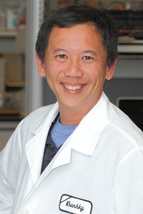
Khanhky Phamluong (aka Ky)
Staff Research Associate
Lab Member Since: 1999
Approach: molecular biology, biochemistry
Email: [email protected]
Ky obtained his bachelor degree in molecular and cell biology from the University of California, Berkeley. As one of the founding members of the lab he is involved in almost every project of the lab utilizing his expertise in cell biology, biochemistry, immunofluorescence and imaging.
Staff Research Associate
Lab Member Since: 1999
Approach: molecular biology, biochemistry
Email: [email protected]
Ky obtained his bachelor degree in molecular and cell biology from the University of California, Berkeley. As one of the founding members of the lab he is involved in almost every project of the lab utilizing his expertise in cell biology, biochemistry, immunofluorescence and imaging.


|
Caitlin Castagnola
|
Dana Kennedy
Student
Lab Member Since: 2016
Email: [email protected]
Pictures by Khanhky Phamluong